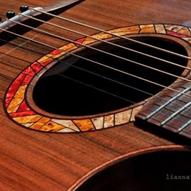
The sanding sponge may be part of the problem in getting rid of all the scratches. (Also, sponges will cause the rosette sometimes to stand proud of the top surface a little and it won't really show up til the finish is done.

) I use a small mahogany block about 3" x 4" and just fold the sandpaper around it. Its perfectly flat on the sanding side and the edges are slightly rounded to prevent accidentally gouging anything.
I would go back to 120 or 150 fre-cut and sand methodically back and forth with the grain. Glide the block onto the edge and finish the stroke as you're going off the other end. Check after a while and see if all the scratches look uniform. Then go to 180 or 220 and do the same. I would then,
not that you have to though, wipe the top with a clean white cloth dampened with a little distilled water to raise the grain.
Just slightly damp is all you need...not wet. Wait an hour or so to dry and lightly use the 220 again. After you think you're close wipe down the top with Naptha and a paper towel to remove sanding dust etc. and you can see while its still wet with Naptha if you have any deep scratches. Unless they're really deep they probably won't show but the wetting with Naptha will tell you that.
FWIW, I never go past 220 when using lacquer and when french polishing I usually stop at 180 as not to choke the wood and make it too difficult for the finish to adhere.






















 Login
Login Register
 FAQ
FAQ







 I guess I'll go with my rubber sanding block and fre-cut sandpaper, it just seemed cumbersome compared to the sponges I thought. I do have an scrap top I might practice on.